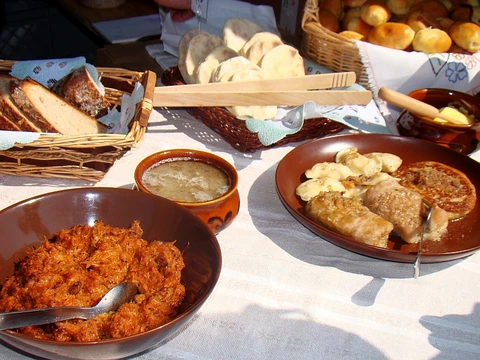
Czernina
Polish duck blood soup with sweet-sour flavor and cultural symbolism.
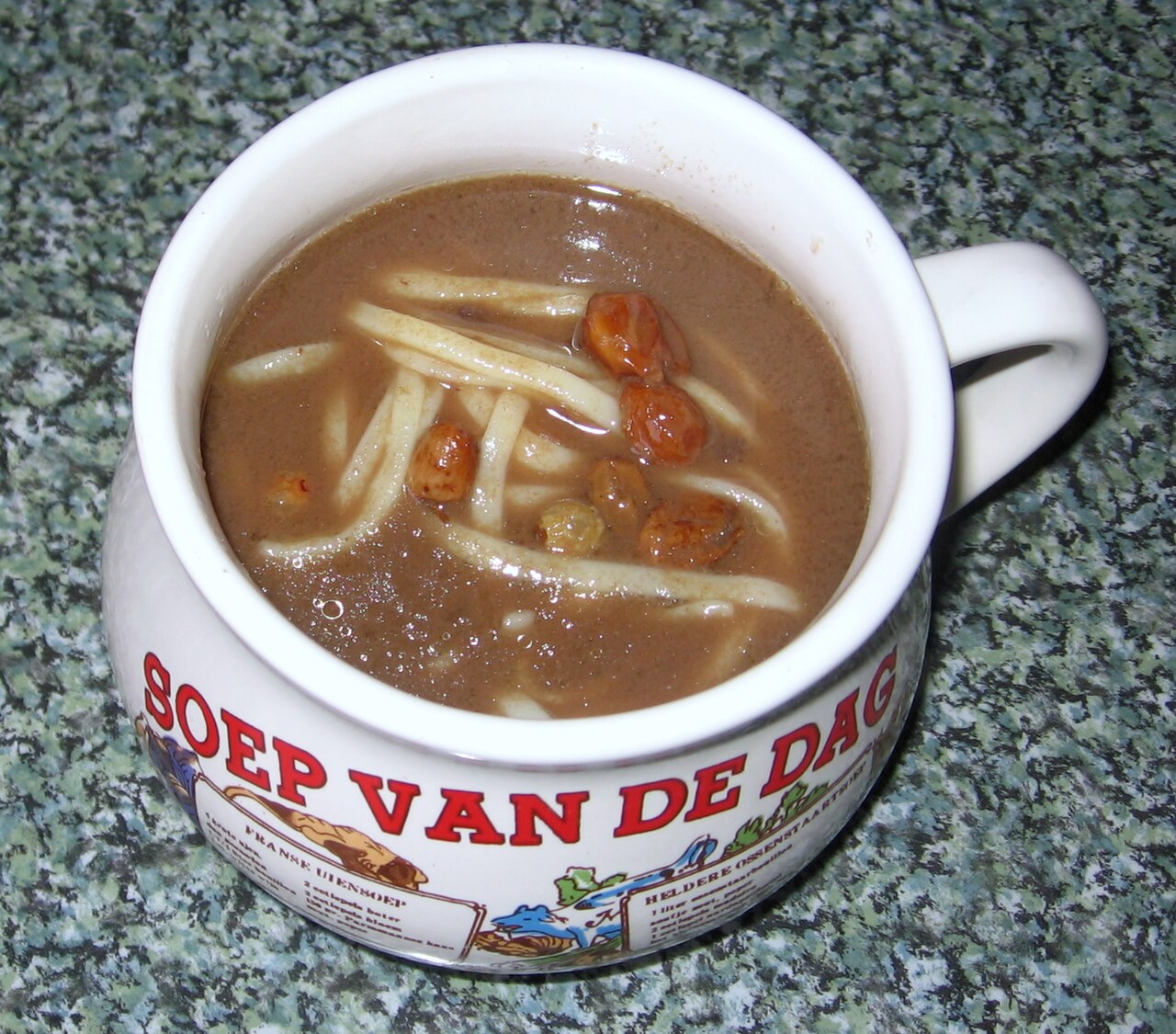
Czernina (pronounced [t͡ʂɛrˈɲina], from the Polish word *czarny* for "black," and also written as czarnina or czarna polewka) is a Polish soup whose main ingredient is duck blood, combined with a clear poultry broth. Rabbit or pig blood may be used instead. In English, it is sometimes called "duck blood soup."
The soup’s flavor is typically sweet and sour, achieved by balancing sugar and vinegar. Hundreds of regional variations exist across Poland, Belarus, and Lithuania. Common additions include plum or pear syrup, dried pears, plums, or cherries, apple vinegar, and honey. Like many Polish soups, czernina is often served with kluski, fine noodles, macaroni, boiled potatoes, or dumplings.
Until the 19th century, czernina carried a cultural meaning in Poland: it was served to young men who sought a woman’s hand in marriage but were rejected. This tradition appears in Adam Mickiewicz’s epic poem *Pan Tadeusz*. The dish is also a regional specialty in Kashubia, Masuria, and Poznań. Czernina closely resembles Swedish svartsoppa.
- type
- soup
- origin
- Poland, Belarus, Lithuania
- main_ingredients
- duck blood, clear poultry broth
- alternative_ingredients
- rabbit or pig blood
- flavor_profile
- sweet and sour (sugar and vinegar)
- common_serving
- kluski, fine noodles, macaroni, boiled potatoes, or dumplings
- regional_associations
- Kashubia, Masuria, Poznań
Lore & Background
Czernina is a traditional Polish soup whose name derives from the Polish word for 'black', referring to its dark color from duck blood. It is typically made with duck blood and clear poultry broth, though rabbit or pig blood can be substituted. The soup's sweet and sour taste comes from balancing sugar and vinegar, but hundreds of recipes exist across Poland, Belarus, and Lithuania, incorporating ingredients such as plum or pear syrup, dried pears, plums, cherries, apple vinegar, and honey. It is usually served with kluski, fine noodles, macaroni, boiled potatoes, or dumplings.
Reader's Guide
Until the 19th century, czernina held a symbolic role in Polish culture: it was served to young men applying for the hand of their beloved, and if the suitor was rejected, he would be served czernina. This tradition appears as a plot element in Pan Tadeusz, a famous Polish epic poem by Adam Mickiewicz. The soup is also a regional dish in Kashubia, Masuria, and Poznań. Czernina is very similar to Swedish svartsoppa. Its significance lies in its deep roots in Polish culinary heritage and its unique cultural symbolism, representing both a nourishing meal and a social signal of rejection.
Did You Know?
- Czernina is also spelled czarnina or czarna polewka.
- It is traditionally made with duck blood and clear poultry broth.
- The soup was served to rejected suitors in Polish culture until the 19th century.
- Czernina appears as a plot element in the epic poem Pan Tadeusz by Adam Mickiewicz.
The Dish and Its Name
Czernina is a traditional Polish soup whose very name announces its most striking ingredient. Derived from the Polish word czarny, meaning "black," the dish is also known by the spellings czarnina or czarna polewka, the latter translating directly as "black soup." In English-speaking contexts, it is most commonly referred to as duck blood soup, which captures the essence of the preparation. At its core, the recipe calls for duck blood combined with a clear poultry broth, creating a dark, rich liquid base. However, the dish is not limited to a single source of blood; rabbit or pig blood may be substituted, offering cooks flexibility depending on availability or regional preference. The Polish pronunciation, rendered approximately as [t͡ʂɛrˈɲina], carries a soft, rolling quality that distinguishes it from the more angular English translation. As a staple of Polish cuisine, czernina occupies a place among the country's most distinctive and historically rooted preparations, one that immediately signals its identity through both name and appearance.
Flavor Profiles and the Table
The taste of czernina is defined by a deliberate interplay of sweet and sour notes, achieved primarily through the careful balance of sugar and vinegar. Yet the dish is far from monolithic. Hundreds of distinct recipes circulate across Poland, Belarus, and Lithuania, each region adding its own character to the base. Common flavoring agents include plum or pear syrup, dried pears, plums, or cherries, apple vinegar, and honey, all of which can shift the soup toward fruity depth or sharper tang depending on the cook's hand. When it reaches the table, czernina follows the broader Polish soup tradition of being accompanied by a starch. Typical pairings include kluski, fine noodles, macaroni, boiled potatoes, or small dumplings, giving the diner a textural counterpoint to the smooth, dark broth. This versatility in both seasoning and serving means that no two bowls of czernina are likely to be identical, even within a single village.
A Symbol of Courtship and Culture
Long before it became simply a regional specialty, czernina carried a powerful social meaning in Polish life. Until the nineteenth century, the soup functioned as a symbolic gesture in matters of the heart. A young man seeking to court a woman would present himself to her family, and the response was communicated through the meal he was served. If the suitor was turned down, he would be handed a bowl of czernina, a clear and unambiguous signal of rejection. This custom was so embedded in the cultural imagination that it found its way into one of Poland's most celebrated literary works, Adam Mickiewicz's epic poem Pan Tadeusz, where the dish serves as a plot element. Beyond the courtship tradition, czernina also holds a strong regional identity, being particularly associated with the areas of Kashubia, Masuria, and Poznań, where it remains a point of local pride and culinary heritage.
Blood Broths Across Borders
Czernina does not exist in culinary isolation. The practice of preparing soups from animal blood is a widespread tradition, and the dish sits within a broader category of blood-based foods found across many cultures. Its closest neighbor in flavor and concept is the Swedish svartsoppa, a preparation so similar that the two dishes are often compared directly. Further afield, Vietnamese cuisine offers Tiết canh, a dish built around raw duck blood, while other Asian traditions feature chicken and duck blood soups or duck blood and vermicelli preparations. These parallels underscore that the use of blood as a cooking ingredient is neither exotic nor confined to a single culinary tradition. Czernina's place within Polish cuisine, alongside its cross-border cousins, reminds us that what might initially seem unusual to an outside palate is, in fact, a long-standing and widespread approach to making the most of available ingredients.
Gallery




Frequently Asked Questions
What is Czernina and where does the name come from?
Czernina is a traditional Polish soup built around duck blood stirred into a clear poultry broth. The name derives from the Polish word for 'black,' and you'll also see it spelled czarnina or czarna polewka in some regions.
What does Czernina actually taste like?
The flavor is a deliberate sweet-and-sour balance, typically achieved by combining sugar with vinegar. Cooks often layer in plum or pear syrup, dried cherries or pears, apple vinegar, and a dash of honey to round out the profile.
What are the core ingredients, and can I substitute anything?
Duck blood in a clear poultry broth forms the base, but rabbit or pig blood are acceptable alternatives in many households. Beyond that, hundreds of regional variations exist across Poland, Belarus, and Lithuania, so there is no single 'correct' recipe.
What do you serve Czernina with?
It is commonly paired with kluski (dumplings), fine noodles, macaroni, or boiled potatoes, all of which absorb the thin broth well. The choice of side is largely a matter of family tradition and local custom rather than a strict rule.
Is Czernina still a living dish or just a historical curiosity?
It remains a regular part of home cooking in Poland, Belarus, and Lithuania rather than a relic found only in old cookbooks. The sheer number of regional and family-specific variations suggests it is still actively prepared and passed down.
More in Polish cuisine 1-24
Spotted an error? Know more?
This is a living reference — every entry is fact-audited, and reader corrections feed straight into our audit queue. Suggest an edit · See this site's audit record