Bialy (bread)
A chewy yeast roll with a depression, baked not boiled.

Wikipedia / Wikimedia Commons
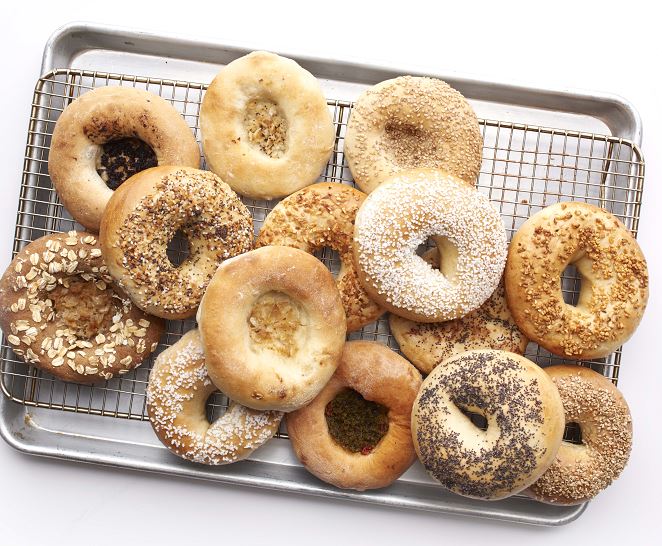
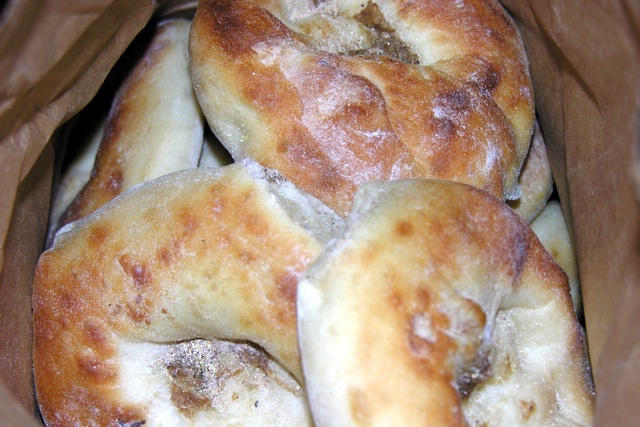
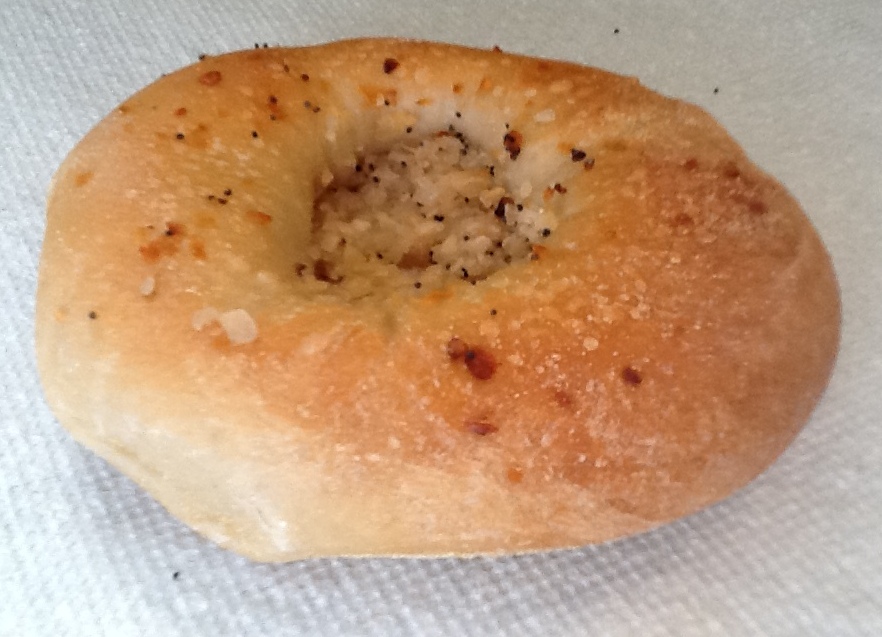
The bialy is a chewy yeast roll that resembles a bagel but is baked, not boiled, and has a depression in its center rather than a hole. It can be up to six inches across, and the indentation is traditionally filled with diced onion, sometimes along with garlic, poppy seeds, or bread crumbs, while the top is often covered with onion flakes. This bread originated in the Ashkenazi cuisine of the Jewish community in Białystok, Poland, and after that community was destroyed in the Holocaust, survivors from Białystok brought the bialy to New York City in the late 1940s and 1950s. There it became a staple of Jewish bakeries in the Northeast and a popular breakfast bread, especially among American Jews, though it never achieved the mainstream popularity of the bagel. Because traditional bialy-making is time-consuming, many bakeries now use dough mixers. Bialys are considered an iconic New York City food and can be hard to find outside that area, though frozen versions are sold nationally under brands like Kossar's. The bread has also spread to other U.S. cities and beyond, often with additional or different toppings. Former *New York Times* food writer Mimi Sheraton wrote a 2000 book, *The Bialy Eaters: The Story of a Bread and a Lost World*, exploring the bialy as a symbol of Białystok's Jewish heritage.
- type
- bread roll
- origin
- Białystok, Poland
- associated_cuisine
- Ashkenazi Jewish
- diameter
- up to 15 cm (6 in)
- key_characteristic
- baked, not boiled; has a depression instead of a hole
- traditional_toppings
- chopped onion, poppy seeds
Lore & Background
The bialy is a chewy yeast roll similar to a bagel, with a diameter of up to 15 centimetres. Unlike a bagel, which is boiled before baking, a bialy is baked, and instead of a hole it has a depression. Before baking, the depression is sometimes filled with diced onion and other ingredients such as garlic, poppy seeds, or bread crumbs.
The bialy was brought to the United States by Holocaust survivors from Białystok in the late 1940s and 1950s and became a staple of Jewish bakeries in the Northeastern United States. It became a popular breakfast bread in New York City and its suburbs, especially among American Jews. Bagel bakeries often make bialys, but they have failed to reach mainstream popularity.
Traditionally, preparing bialys is time-consuming, so many bakeries now use dough mixers, as is common in bagel making. Bialys are considered an iconic New York City food and can be difficult to find outside that area, but frozen bialys are sold under several brand names, such as Kossar's, in supermarkets across the US.
Reader's Guide
The bialy holds significance as a symbol of the Jewish heritage of Białystok, Poland, and as a culinary link to a community destroyed during the Holocaust. Its migration to the United States with Polish Jewish immigrants in the late 19th century established it as a staple of Jewish bakeries in the Northeastern US, particularly in New York City, where it remains a popular alternative to the bagel. Though it has not achieved mainstream popularity nationwide, the bialy is considered an iconic New York City food. Its legacy is preserved in part by bakeries like Kossar's Bialys, the oldest bialy bakery in the United States, and by works such as Mimi Sheraton's book 'The Bialy Eaters: The Story of a Bread and a Lost World,' which explores the bialy's role as a symbol of a lost world. The bialy's continued availability, including frozen versions sold across the US, ensures its place in American food culture.
Did You Know?
- Unlike a bagel, a bialy is baked, not boiled.
- The bialy has a depression in the center instead of a hole.
- The bialy was part of the traditional Ashkenazi cuisine of the Jewish population of Białystok, Poland, until the Holocaust.
- Frozen bialys are sold under brand names such as Kossar's in supermarkets across the US.
Origins in Białystok and the Ashkenazi Table
The bialy traces its roots to the Jewish communities of Białystok, Poland, where it occupied a cherished place within the broader Ashkenazi culinary tradition. For generations, this bread roll was woven into the everyday food culture of that city's Jewish population, serving as a familiar, comforting staple. However, the Holocaust brought catastrophic destruction to the community of Białystok, and with it the living tradition of bialy-making was severed at its source. The bread survived only because Jewish immigrants carried the recipe and the practice with them as they resettled in New York City. There, the bialy found a new home and continued to be valued as a distinctive alternative to the more widely known bagel. Though its original context in Polish Jewish life was lost, the roll persisted as a tangible link to a world that no longer existed, carried forward by those who had fled and rebuilt their lives in American cities.
Anatomy and Baking Method
Physically, the bialy is a chewy yeast roll that shares a general resemblance with the bagel, measuring up to fifteen centimeters in diameter. Yet the two breads differ in fundamental ways. Where a bagel is boiled before it enters the oven, the bialy goes straight to baking. Instead of the characteristic central hole of a bagel, the bialy features a shallow depression pressed into its top. This indentation is the roll's defining feature and serves as a vessel for its traditional toppings. Before baking, the depression is commonly filled with diced onion and sometimes enriched with garlic, poppy seeds, or bread crumbs. The surface is typically dusted with onion flakes, and a scattering of poppy seeds adds texture and visual contrast. The result is a bread that is both structurally distinct from its bagel cousin and richly layered with savory, aromatic elements that make it a uniquely flavored experience.
A New York Staple and a Niche Beyond
Polish Jewish immigrants introduced the bialy to the United States in the late nineteenth century, and it quickly became a fixture in Jewish bakeries across the Northeast. In New York City and its surrounding suburbs, the roll gained particular popularity as a breakfast bread, especially within American Jewish communities. Many bagel bakeries include bialys in their offerings, yet the bread never achieved the same level of mainstream recognition as its ring-shaped counterpart. Part of the reason is practical: traditional bialy preparation is notably time-consuming, a labor-intensive process that has led many modern bakeries to adopt dough mixers, mirroring the mechanization seen in bagel production. Outside of New York, fresh bialys remain hard to come by, though the bread has spread to a lesser degree in other American cities and beyond, sometimes with altered or additional toppings. For those who cannot find a fresh one, frozen bialys are available under brand names such as Ray's New York in supermarkets throughout the country.
Cultural Echoes and Lasting Presence
The bialy's cultural footprint extends well beyond the bakery counter. It is widely regarded as an iconic element of New York City's food identity, a symbol that resonates with the city's deep Jewish heritage and its historical ties to Białystok. This symbolic weight was captured in 2000 when former New York Times food writer Mimi Sheraton published The Bialy Eaters: The Story of a Bread and a Lost World, a book devoted to the roll and its role as a marker of Jewish identity and memory. In the commercial realm, Kossar's Bialys holds the distinction of being the oldest dedicated bialy bakery in the United States, anchoring the bread's long American history. The bialy also appears in broader culinary contexts: the Seattle-style hot dog, for instance, was originally served on a bialy stick topped with cream cheese. Related breads such as the cebularz and the pletzel share structural similarities, placing the bialy within a wider family of indented, onion-topped rolls.
Gallery
Frequently Asked Questions
Who is Bialy (bread)?
Bialy is a chewy, yeast-leavened bread roll that looks bagel-like at a glance but is baked rather than boiled. Instead of a full center hole, it has a shallow depression, and individual rolls can reach up to about six inches across.
What are Bialy (bread)'s powers/role?
Its signature feature is that central dimple, which traditionally gets stuffed with diced onion and sometimes garlic, poppy seeds, or breadcrumbs. A scattering of onion flakes on the top round out its savory, slightly sweet flavor.
Where did Bialy (bread) come from?
Bialy was born in the Ashkenazi Jewish kitchens of Białystok, Poland, where it became a beloved everyday roll for the local community long before it ever traveled abroad.
How does Bialy (bread)'s story end?
Polish Jewish immigrants carried the recipe to New York City, where it took root in local bakeries and delis. Despite the later destruction of the Białystok community in the Holocaust, the roll survived and thrived in its new American home.
Why is Bialy (bread) important?
Bialy is a tangible thread connecting modern eaters to the Ashkenazi Jewish food culture of Białystok. Its continued presence on bakery shelves keeps a piece of Polish-Jewish culinary heritage alive well beyond its original neighborhood.
More in Polish cuisine 1-24
Spotted an error? Know more?
This is a living reference — every entry is fact-audited, and reader corrections feed straight into our audit queue. Suggest an edit · See this site's audit record