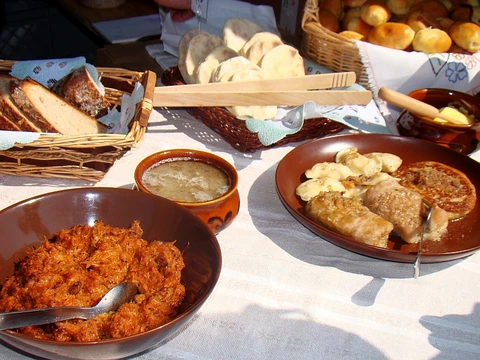
Compendium ferculorum, albo Zebranie potraw
Author of the first Polish cookbook, *Compendium ferculorum*.

Wikipedia / Wikimedia Commons
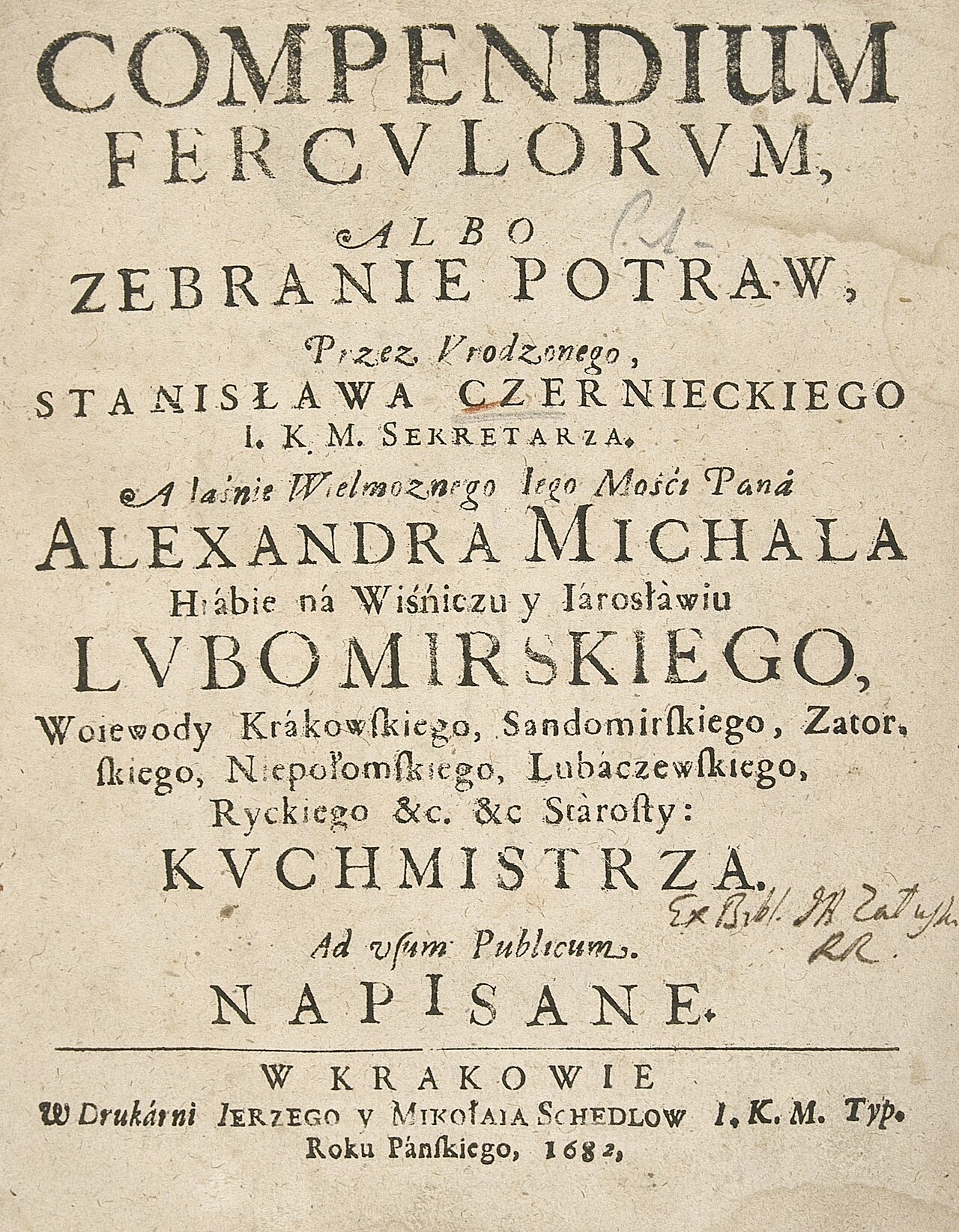
Stanisław Czerniecki was an ennobled burgher who served as head chef and property manager for three generations of the magnate house of Princes Lubomirski. He is best known for writing *Compendium ferculorum, albo Zebranie potraw* (A Collection of Dishes), first published in 1682, which is the earliest known cookbook published originally in Polish. His work provides a crucial record of Polish Baroque cuisine and had a lasting impact on the development of Polish culinary tradition.
- field
- Cookery, Culinary Literature
- nationality
- Polish
- known_for
- Author of the first cookbook published originally in Polish, *Compendium ferculorum* (1682)
- role
- Head chef and property manager for the Lubomirski family
Lore & Background
Czerniecki began his service around 1645 under Stanisław Lubomirski, then served under his eldest son Aleksander Michał Lubomirski and his grandson Józef Karol Lubomirski. Although his book was first printed in 1682, it must have been completed before Aleksander Michał Lubomirski's death in 1677. Czerniecki wrote the work in his capacity as head chef at the court of the house of Lubomirski and dedicated it to Princess Helena Tekla Lubomirska, recalling a famed banquet given to Pope Urban VIII by her father, Prince Jerzy Ossoliński, in 1633.
Reader's Guide
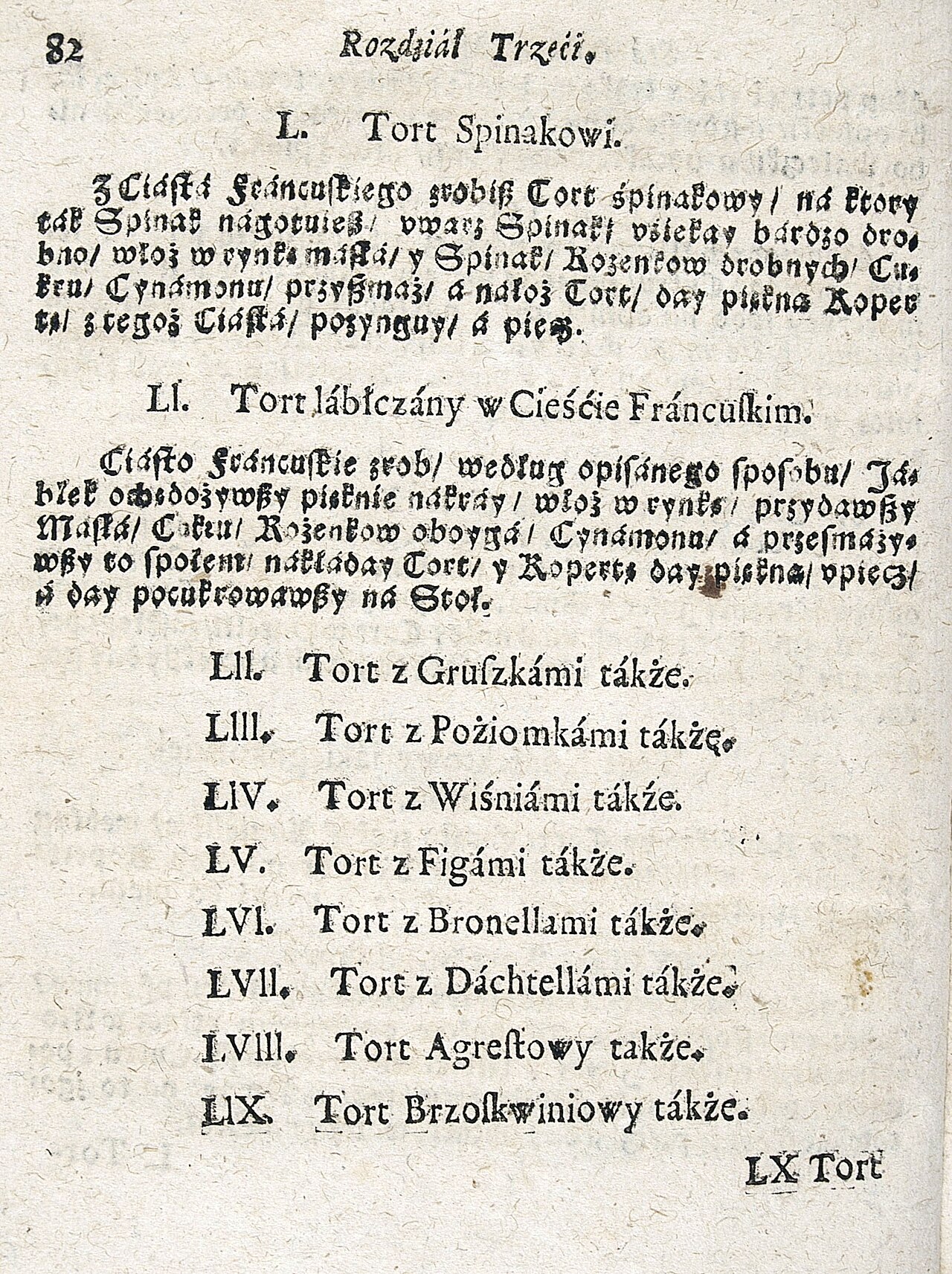
*Compendium ferculorum* contains 333 recipes divided into three chapters of 111 recipes each, devoted to meat, fish, and other dishes, each concluding with a 'master chef's secret'. Czerniecki's cooking style was typical of luxuriant Polish Baroque cuisine, which still had a largely medieval outlook but was gradually absorbing French influences. It was characterized by generous use of vinegar, sugar, and exotic spices, and a preference for spectacle over thrift. The book was republished several times during the 18th and 19th centuries, sometimes under new titles, and had an important impact on the development of Polish cuisine. It also served as an inspiration for the portrayal of an Old Polish banquet in *Pan Tadeusz*, the Polish national epic. Czerniecki's work may be seen as a response to the onslaught of culinary cosmopolitanism from France, as it promoted traditional domestic cuisine in the Polish vernacular.
Did You Know?
- The book has a bilingual Latin and Polish title: *Compendium ferculorum* and *zebranie potraw* both mean 'a collection of dishes', joined by the Polish conjunction 'albo' ('or').
- Czerniecki's dedication mentions he had already served the house of Lubomirski for 32 years.
- The book includes a recipe for beaver tail, which was considered a fish for the purposes of Catholic dietary law.
- Some numbered headings in the book are not followed by actual recipes, but merely reiterate that various dishes may be prepared using the same basic technique.
The Chef Behind the Court
Czerniecki's life was inseparable from the Lubomirski magnate household, where he served across three successive generations. An ennobled burgher by origin, he entered the family's service around 1645 under Stanisław Lubomirski, then remained through the tenure of the latter's eldest son, Aleksander Michał, and finally the grandson, Józef Karol. His duties extended well beyond the kitchen; he also managed the estate's properties, a role that gave him a broad view of the household's material life. By the time he composed his cookbook, he had already logged roughly three decades of loyal service, a fact he proudly noted in the dedication to Princess Helena Tekla Lubomirska, his "most charitable lady and benefactress." Although the volume appeared in print in 1682, internal evidence suggests the manuscript was finished before Aleksander Michał's death in 1677, meaning the work crystallized during a period of transition within the family. Czerniecki's dual identity as estate manager and head chef shaped the book's practical, large-scale orientation toward banqueting rather than everyday home cooking.
A Stand Against French Cosmopolitanism
The publication of Compendium ferculorum in 1682 arrived roughly three decades after François Pierre de La Varenne's Le Cuisinier françois (1651) had ignited a sweeping culinary revolution across Europe. The French model championed domestic herbs over imported spices, seeking to let the natural character of ingredients shine through. Polish magnates embraced this trend eagerly; many courts employed French chefs, and even King John III Sobieski, married to the French-born Marie Casimire d'Arquien, kept a copy of La Varenne's volume in his library. Czerniecki's book, written entirely in the Polish vernacular and celebrating the traditions of domestic cookery, reads almost as a deliberate counterstatement. His kitchen was one of spectacle and abundance: vinegar, sugar, and an array of exotic spices—saffron, cinnamon, cloves, nutmeg, mace, ginger—were deployed lavishly. The guiding principle was not restraint or the revelation of a single pure flavour, but the grandeur of the table. In this sense, the compendium preserves a medieval sensibility that was already yielding, piece by piece, to the new continental currents.
Architecture of a Banquet
The book's structure mirrors the logic of a great feast. Three hundred and thirty-three recipes are arranged into three equal chapters of one hundred and eleven each, devoted respectively to meat, fish, and other dishes. Every chapter closes with a "master chef's secret," a final flourish that rewards the reader's patience. Before the recipes begin, Czerniecki provides a detailed inventory of provisions, kitchenware, and staff required to stage a banquet. The food list sweeps from the snow bunting to the great bustard among game birds, through cereals, pasta, fresh and dried fruits, and mushrooms, to vegetables now largely forgotten—cardoon, Jerusalem artichoke, and a turnip-rooted chervil he cheekily dubs "priest's balls." His "spices" heading is broad: alongside saffron, pepper, and cumin, he lists powdered sugar, rice, raisins, citrus fruits, and even smoked ham and beef tongue, all treated as seasoning agents. He also offers pointed advice on the conduct of the kuchmistrz, insisting on sobriety, neatness, a white apron, trimmed nails, and a temperament that is brisk yet submissive, before warning against the vulgar habit of dusting dishes with bread crumbs.
Legacy and the Polish Table
Czerniecki was acutely conscious that he was the first to set down practical cookery knowledge in the Polish language, and he said so plainly in his opening lines. Whether or not a sixteenth-century translation of a Czech cookbook attributed to Bavor Rodovský ever circulated, no surviving copy confirms its existence, and Czerniecki's volume remains the oldest known work of its kind published originally in Polish. Its afterlife has been considerable: the book was reprinted multiple times through the eighteenth and nineteenth centuries, occasionally under altered titles, and it left a measurable imprint on the evolution of Polish cuisine. Perhaps most strikingly, the vivid banquet scenes in Pan Tadeusz, the Polish national epic, draw on the kind of Old Polish table that Czerniecki so meticulously described. The dedication itself evokes the legendary 1633 reception hosted by Prince Jerzy Ossoliński for Pope Urban VIII in Rome, an event famed for its deliberate extravagance, down to the loose golden horseshoes that clattered away on the city's streets. In that spirit of showy generosity, the compendium endures as a monument to a culinary age that prized spectacle above all.
Gallery




Frequently Asked Questions
What is Compendium ferculorum, albo Zebranie potraw?
It is a 1682 cookbook that holds the distinction of being the first culinary work published originally in the Polish language. Compiled by Stanisław Czerniecki, it catalogs the rich Baroque-era dishes once served in Polish noble households.
Who wrote Compendium ferculorum, albo Zebranie potraw?
Stanisław Czerniecki, an ennobled burgher who spent his career as head chef and estate manager for the Lubomirski magnate family. His three generations of service in a wealthy noble kitchen gave him the practical expertise to compile the collection.
When was Compendium ferculorum, albo Zebranie potraw first published?
The work was first printed in 1682. It has since become a foundational text in Polish culinary literature.
Why is Compendium ferculorum, albo Zebranie potraw considered important?
It stands as the earliest surviving written record of Polish Baroque cuisine, preserving recipes and kitchen practices that would otherwise have vanished. Its influence on the trajectory of Polish cooking traditions has endured for over three centuries.
What was Stanisław Czerniecki's role before writing Compendium ferculorum, albo Zebranie potraw?
He served as both head chef and property manager for the Princes Lubomirski across three successive generations. This position placed him at the center of one of Poland's most prominent noble households, shaping his culinary knowledge.
More in Polish cuisine 1-24
Spotted an error? Know more?
This is a living reference — every entry is fact-audited, and reader corrections feed straight into our audit queue. Suggest an edit · See this site's audit record